


















Ian McKellen & Patrick Stewart
Waiting for Godot
By Samuel Beckett
Directed by Sean Mathias
Beckett's characters have lost none of their power to fascinate and amuse. This production, directed by the acclaimed theatre and film director, Sean Mathias, has attracted the sort of great actors that the play deserves.
Ian McKellen and Patrick Stewart are both renowned Shakespearean actors at Stratford-upon-Avon, in the West End and on Broadway. They first worked together in Tom Stoppard’s Every Good Boy Deserves Favour for the Royal Shakespeare Company in 1977 and more recently in the X-Men film trilogy, as Magneto and Professor X. Each of them has established their own iconic screen persona, as Gandalf in Lord of the Rings and as Star Trek’s Jean-Luc Picard.
Their new partnership with Beckett promises to be the theatre event of the year.
From 5th March To 14th March
Times Eves 8pm (except Sunday) Mats on 11th & 14th March at 2.30pm
Prices £23-£35
Concessions £1 off for over 60s, unwaged, under 25s
Venue Festival Theatre
Genre Drama
Waiting For Godot is the most entertaining production I've seen in a long time, with highly charismatic performances by the whole cast who seemed to perfectly fit each role. Ronald Pickup could almost have stolen the show with his interpretation of 'Lucky' thinking, which had the audience gradually ascending - along with the speech - into fits of laughter. However, Ian McKellen and Patrick Stewart were compelling, especially Patrick's portrayal of 'Vladimir' which was exemplary, taking the audience on an emotional journey through humour, misery, despair and ultimately friendship. All told, the best version to-date of Beckett's masterpiece.
Malvern Theatre is hosting a play described as a twentieth Century classic before it opens in the London West End. The cast also might be described in such terms because of the fame and reputation of actors such as Sir Ian McKellen and Ronald Pickup and Simon Callow and Patrick Stewart. Local theatre goers have an opportunity to observe masters playing a masterpiece.
This Samuel Beckett play which premiered in French in Paris in 1953 in the Left Bank Theatre continues to bemuse students and specialists and yet has attracted audiences ever since its original production. Jean Martin who played the original character Lucky died on 2nd February 2009 and was the last survivor of the original cast.
The author died in 1989 in France far from his birthplace in the Dublin suburb of Foxrock the son of a quantity surveyor and a nurse. A student cricketer who played County cricket Beckett is the rarity of a Nobel Prize winner with an entry in Wisden the cricketer’s almanac. Beckett is much more than a writer with the ultimate literary award for his wartime record with the French Resistance earned him many decorations for valour.
This play evolved in his mind only a few years after WW2 had finished. This is his most famous play described by the Irish Times critic of 1956 as “ a play in which nothing happens that yet keeps audiences glued to their seats.” That early assessment has remained valid over the next fifty years.
Who is Godot is one of the mysteries of literature and of the theatre. The interpretations have ranged from the biblical to the political to the philosophical to the psychoanalytical. Everyone can select their own Godot. Beckett declared Godot is not God but rather enigmatically a French slang word for foot – godillot.
The small cast in Malvern illustrious that they are follow giants of the stage including Ralph Richardson and John Kani and Peter O’Toole as the characters of Estragon and Vladimir and Pozzo and Lucky develop on stage.
Lucky is the strange silent slave of many years to Pozzo in a relationship that questions the reality of the role of dependence between master and servant until the spectacular soliloquy of unpunctuated angst explodes from his suppressed soul. Pozzo the poseur is costumed as if a cross between pantomime Toad of Toad Hall and Mr. Pickwick and played with the paradox of panache and pathos which seduces the audience from concern for the patent cruelty towards Lucky into a latent connivance and condonation of this conduct.
Estragon opens the play by trying to remove his boot and then inspects his own hat and these items recur during the play. Vladimir stands and wants to talk but Estragon sits and has limited conversation. They use nicknames for each other. Godot is on his way throughout the two days in which the play is set and almost the last words are from Vladimir who declares that with his arrival “ we’ll be saved.”
Extracts from the text indicate phrases which have become familiar such as “ we’ve lost our rights. We got rid of them” and “ that passed the time. It would have passed in any case. Yes, but not so rapidly” and “ it’s the start that’s difficult. You can start anything. Yes, but you have to decide” and most tellingly as if in the mind of modern of Rumsfeld “ I don’t know why I don’t know.”
This quartet of quality bring such precision to their performance that words and gestures and moves and volume and silences compel so much concentration by the audience that after two hours of sitting there is a sense of exhaustion.
The duet of Estragon and Vladimir are an elergy to the elderly. Whilst the youthful sector of the full theatre reacted laughingly to the bathos and confusion of the senile characters the more mature members would have sensed the sharpness of the portrayal with a sense of sympathy and anxious nervousness. These actors were able to resonate with the entire assembly to the extent of spontaneous and sustained applause and standing ovation. Such response bodes well for the sell-out season at Malvern and should be a harbinger of reactions as the national tour wends its way to the Haymarket in London.
On a personal level one completely forgets that it is Lord of the Rings chatting to Star Trek with alternative diversion from Four Weddings and a Funeral with Fortunes of War. Yet meeting these instantly recognisable individuals there is a sense of fraternal familiarity and mutual respect which enables such a difficult play to become an example in excellence of the art of entertainment.
Physically McKellen and Stewart present as if tightly wired and tense as in stretched steel operating in a controlled and disciplined manner focused on delivering enigmatic words with engineered precision thus packing a powerful message which compels constant attention.
Callow plays Pozzo as expansive and effusive as the shallow and insecure so often and noisy even when in distress and Pickup as Lucky is almost pious in his obedience as a marionette under management. Together they bring more obvious comprehensible images of stressed relationships to the stage but which raise more profound questions for discussion afterwards.
The young actor Tom Barker as Boy the messenger from Godot steadfastly holds his place under cross examination for his purpose in the play with the galaxy of talent around him and will no doubt have the finest of tutorials in exchange for the few moments on the same stage.
Whether the play is Theatre of the Absurd or not the question remains in the mind of each theatregoer whether this production answers the riddles that have amused audiences all over the world in many languages. There is however no riddle that the presence of this foursome of world class actors opening this play in Malvern is the chance of a lifetime to witness truly great actors performing this drama of iconic status in what may prove to be a classic that becomes a legend when it reaches London.
A superb cast whom it was a privilege to watch perform on the same stage as one another. A complex play that's not to be taken lightly and had me leaving the theatre turning the possible plot over in my head. Perhaps I needed a thinking cap like 'Lucky'?
Simon Callow gave a ringmaster quality to Pozzo in the first half. He turned the boisterous character around in the second half and one could almost sympathise with his plight.
A first rate performance from Ronald Pickup, actions spoke louser than words.
Patrick Stewart and Sir Ian McKellen had an excellent chemistry. I recommend this play to anyone, but don't expect to feel that all is cut and dried!
You will not see a finer masterclass of acting than this. With 4 of Britain's best actors would you expect any less? It was a privilage to see them in the provinces together. Did I understand the play? No! Did it matter? No! A pure joy to be entertained so unbelievably well.
Congratulations to Malvern Theatre for the courage in putting on this play.
I knew I had to see this production as soon as I heard about it, simply because it stars my two favourite actors. I knew it was a controversial and unusual affair, but I was prepared for anything Beckett could throw at me. It soon became clear that the play was more than worthy of all the praise it has recieved over fifty years, and certainly one that no amount of background reading could prepare a viewer for! It was in a word STUPENDOUS, I would see it again tomorrow if I could. McKellen and Stewart are fabulous together, the very image of a married couple in a long love/hate relationship. The chemistry was wonderful, and both actors were equally as fantastic, each character (and that's including the incredible Pozzo and Lucky - Ronald Pickup and Simon Callow were just as impressive) played clearly and carefully, with great attention to the genius script and stage directions to make this production touching, shocking and utterly hilarious throughout. Patrick and Ian are perfect foils for one another and it may indeed be the case that nothing hapens, twice; but if so I have never spent a more enjoyable and amusing three hours of nothing!
I was wary of "Godot", having read several disparaging comments on its unfathomable plot and potential tedium. I have also fallen foul of "star vehicles" in the past, paying too much to see a "name" in the West End, then unable to remember anything about the performance or play a few years later. As an antidote to such misgivings, this production worked 100%.
Whilst I can well imagine that the play would be purgatory in the hands of a lesser cast, this version wasn't far off magical. Both leads were hard to fault,and while I have never been a fan of Simon Callow, the character of Pozzo was sufficiently unsympathetic to make even that casting work for me. Ronald Pickup's thinking scene was both breath-taking and inexplicably moving. I left the theatre feeling genuinely privileged to have see such a production.
I bought the text the following day and it is some reflection of the performers' virtuosity that their voices resonate from the page as I read it. Don't fully understand it mind you, but I doubt that matters...
Waiting for Godot A Festival of Theatre Stars!
This is one of the greatest productions and ensemble performances I have seen in nearly fifty years of theatre-going. Director Sean Mathias and his team have brought Malvern audiences a very special experience.
The moment I saw the set as we entered the theatre I knew this was going to be a production with an individual approach. A huge dilapidated theatre proscenium, with crumbling, ornate boxes on either side, fills the stage and this ruined auditorium points to the theatrical slant of the production. The stage setting, according to the text, is “A country road. A tree. Evening”; there is also a “low mound”; in this production it is a chunk of carved stone, obviously fallen from the elaborate proscenium arch. These fragments of civilisation emphasise the chaos and uncertainty that surrounds the characters in this great play.
Advance publicity highlighted Ian McKellen and Patrick Stewart but it was a further pleasure to find Simon Callow and Ronald Pickup in the cast as well. Apart from Simon Callow, they began their professional careers in the early sixties and all four have had long and distinguished careers. I knew we were likely to be in for a treat. There was no disappointment: they gelled perfectly as pairs and as a foursome.
The performances bring out the theatricality suggested by this set as Vladimir and Estragon present what Patrick Stewart called a “comic double act”. They share a past, professional, possibly theatrical, going back “a million years” and practise a number of routines with their bowler hats and Estragon’s boots; they also ceremonially embrace in each act and use a rhythmic and structured language. Pozzo and Lucky bring a circus-like touch with Pozzo as a ringmaster with his whip and Lucky as a performing circus animal at the end of his rope. Again the language is formal and stylised.
Patrick Stewart has a benign, smiling, rather headmasterly relationship with Estragon but he can also respond with sudden irritation and anger while Ian McKellen is more passive and caught up in his own concerns and forgetfulness. His face is wary while his eyes glance about slyly from time to time. Simon Callow is theatrical and comic with his circus coat, his bowler hat and farcical moustache while Ronald Pickup’s Lucky is weary, long-suffering and projects a striking dignity. The angelic ‘Boy’ who delivers the message from Mr Godot was well cast and reminds us of this mysterious figure who, though he never appears, keeps hope and the characters alive
“A play in which nothing happens, twice”; while we smile at the witticism we know there is more to it than that. This production, with its humour and emphasis on survival, is ultimately sustaining. Beckett’s view of the human condition grew steadily gloomier through to his eighth decade but Godot, his masterpiece written in his early forties, entertains and nourishes us with the resilience and endurance of its characters, their dependence and their independence.
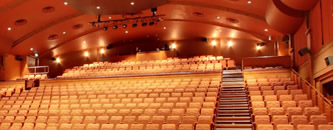
I hate to be the one to break up a party but i found this production a disappointment, awkward and strangely unmoving, maybe because it seemed hammy. This extraordinarily talented cast in a wonderful play should have been a treat but, visually, Waiting For Godot is too small a play to fill this theatre. It would have done far better in somewhere like the Cottlesloe. As it was, I found the actors' "foghorning" mannered and distancing. The joy and pain that the play can create is delicate but the need to fill the big space killed intimacy stone dead.
However did Sean Matthias conjure up such old fashioned acting styles from Mckellan and Stewart? I thought even Olivier abandoned this style of grandstanding somewhere back in the 1950s.
The highly original set (a ruined music hall) was particularly distracting and the cast didn't seem to know what to do with it as there was very little interaction with it. Beckett's aim, with his minimalist set, is to bring the eye and ear back to Vladimir and Estragon but this set encouraged the opposite reaction.
Who decided on the northern accents for Vladimir and Estragon? Much of the musicality of the text was lost as a result. The Irish brogue encourages wides ranges of notes and rising and falling phrasing from actors whilst this Northern accenting took every phrase down. Quite simply, the business of listening - which has to be nurtured in modern audiences - became boringly predictable.
Unlike other reviewers, I thought that Callow's Pozzo was by far the best thing in this theatrical rendition of the play, largely because Pozzo is the one self-promoting character in the play. Pickup, meanwhile, was physically wonderful but his Lucky speech seemed under-developed and missed the carefully orchestrated syncopated rhythms that Beckett incorproates to suggest randomness and fixation.
One problem that a contemporary production of Waiting For Godot faces is the limited knowledge modern audiences have of music hall traditions. Beckett sews these traditions carefully into his characterisations. This production almost seemed to change gear for music turns with something close to knowing winks from Stewart and Mckellan when they performed them as if they felt the need to point particularly strong arrows at the music hall element.
I am so disappointed. I have been waiting many months to see this production and it should have been the best thing on this year in the whole of the UK. It wasn't a disaster. How could it be with such great actors? It was merely dull.
Personally I disagree with Mr Howells - for me McKellan and Stewart displayed an intimacy with each other which radiated warmly from the stage. Their performances are fluid and they deliver the lines with a easy, melodic rhythm that makes it a pleasure to listen to. The tragi-comedic elements of both the characters are brilliantly conveyed and make you care deeply about their plight.
Pickup's Lucky is fantastic and his physical energy during his speech complements the random nature of this sudden stream-of-consciousness outpouring - he very nearly steals the show!
For me Callow is the weak point. While his Pozzo is full of bluster and arrogance, there is little depth to the character and his physical performance is lacking. When McKellan and Stewart are on stage but not speaking, their performances are such that you still have to watch them carefully to spot the little nuances in their characters. But with Callow, the times when he is not speaking (filling and lighting his pipe, putting on his coat, etc) feel laboured and at times a little awkward. He did not evoke any feelings within me towards the character. Pozzo is not a character that you should like, but he is a character to which you should not be indifferent, and sadly this was the case.
Having said that, it in no way spoils what is ultimately a very satisfying performance of a very difficult play. Thanks largely to the perfromances of McKellan and Stewart along with an excellent stage design and lighting, this Godot breathes new life into the play.


Val Tyler, Hay